Sunday, 18 February 2018

HISTORY OF SET SQUARE

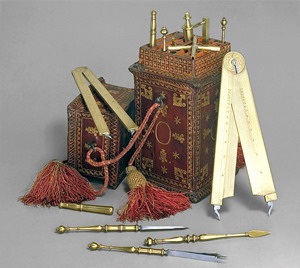
Set Square Signed Nicolas Bion

<< 1 OF 2 >>
DESCRIPTION
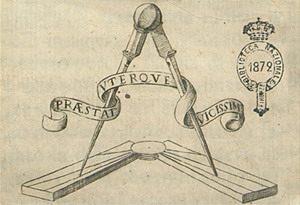
A square is an instrument used to draw lines perpendicular to other lines. It also can be used to test whether two lines are perpendicular. Squares in which the arms are fixed date from ancient times. By the 16th century, they also were made from two rules hinged together at one end so that they fold up compactly, allowing them to fit conveniently into a case of drawing instruments. See MA.316914, MA.335353, 1979.0876.01, and 1984.1070.01.
Early modern squares often had plumb bobs for finding a vertical axis, as in a building under construction. While most others in the collection were lost before they arrived at the Smithsonian, this fixed-leg, L-shaped brass instrument retains its plumb bob, which is tied to a string that runs through a pinhole at the square's vertex. On one side, the long leg of this instrument has a scale divided into units of about 7/16". The scale is numbered by tens from 10 to 100 and is marked: Echelle De 100 parties [scale of 100 parts]. The first unit is divided into tenths and numbered from 1 to 10. This side is also marked: N Bion AParis.
On the other side, the long leg has a scale divided into units of about 7/8". The scale is numbered by tens from 60 to 10 and is marked: Echelle de 60 parties [scale of 60 parts]. The first unit is divided into tenths and numbered from 10 to 1. The outer edge has a scale of French inches (about 1-1/16" English inches) numbered by ones from 5 to 1. The largest unit is divided into twelfths and numbered by threes from 12 to 3. This scale is marked: Pouce de Roy [inch of the French king].
The short leg has a scale divided into units of about 1-25/32". The scale is numbered by tens from 10 to 20 and is marked: Echelle de 20 parties [scale of 20 parts]. The first unit is divided into tenths and numbered from 1 to 10. The outer edge has a scale of French inches numbered by ones from 1 to 4. The largest unit is divided into twelfths and numbered by threes from 3 to 12. This scale is marked: pouce de roy [inch of the French king].
Nicolas Bion (about 1652–1733) made and sold mathematical instruments in Paris in his own shop and as royal maker for Louis XIV. He prepared a famous 1709 manual on the construction and use of mathematical instruments. 1980.0580.05 and MA.321675, two sectors in the collections, also came from his workshop. The Smithsonian acquired this object in 1959. Henry Russell Wray, the previous owner, graduated from the University of Pennsylvania and was a businessman in Colorado Springs, Colo., in the early 20th century.
References: Maya Hambly, Drawing Instruments, 1580–1980 (London: Sotheby's Publications, 1988), 105; Nicholas Bion, The Construction and Principal Uses of Mathematical Instruments, trans. Edmund Stone (London: for John Senex, 1723), 12, Plate 2.

HISTORY OF GALILEO'S COMPASS

HISTORY OF AN INVENTION
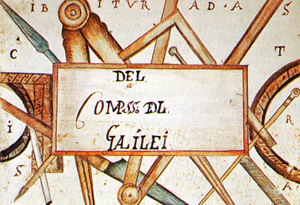
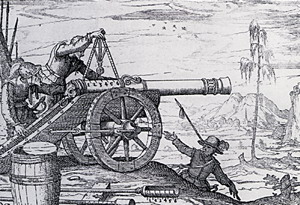
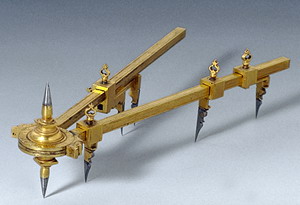
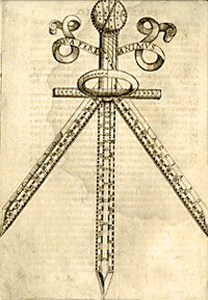
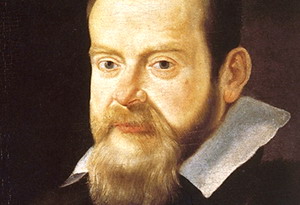
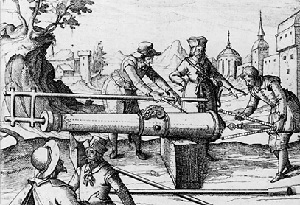
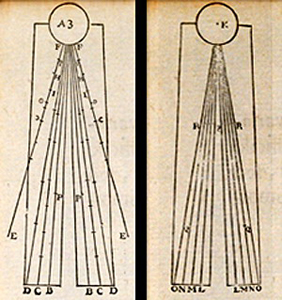
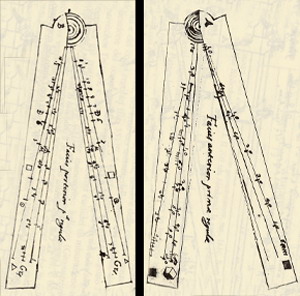
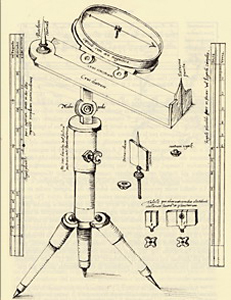
Throughout the Renaissance (fig.1many attempts were made to develop a universal instrument (fig.2) that could be used to perform arithmetical calculation and geometric operations easily. (fig.3) This need was felt especially in the military field, where the technology of firearms called for increasingly precise mathematical knowledge. To satisfy these requisites, the first proportional compasses (fig.4) were developed in the second half of the sixteenth century, among them some singular instruments known as the “radio latino” (fig.5) and the “proteo militare” (fig.6). The geometric and military compass of Galileo belonged to this class of instruments. Invented in Padua in 1597, the instrument is also linked to Galileo’s activity (fig.7) in the Accademia Delia (fig.8), founded in Padua to provide mathematical instruction for young noblemen training for a military career. (fig.9) With the seven proportional lines traced on the legs of the compass and the four scales marked on the quadrant, it was possible to perform with the greatest of ease all sorts of arithmetical and geometric calculations, ranging from calculating interest to extracting square and cube roots, from drawing polygons to calculating areas and volumes, from measuring gauges to surveying a territory. Between 1598 and 1604, Galileo instructed several European sovereigns on the use of his compass, (fig.10) among them Prince John Frederick of Alsace, Archduke Ferdinand of Austria, the Landgrave Philippe of Hesse and the Duke of Mantua.
THE SUCCESS OF THE INSTRUMENT
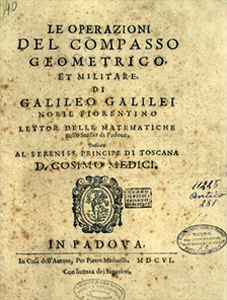
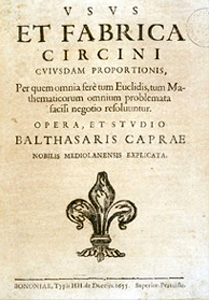
The success of the instrument encouraged Galileo to divulge his invention still further. In 1606 he published 60 copies of Le operazioni del compasso geometrico e militare (fig.11), each of which he sold privately along with one of the instruments. (fig.12) The production of compasses, from which Galileo earned a substantial profit, was entrusted to an instrument-maker whom the scientist housed for some years in his own home. The publication of the treatise immediately aroused great interest, so intense as to provoke bitter arguments in the academic world over the authorship of the invention. Already in 1607 Baldassarre Capra, one of Galileo’s pupils, tried to claim credit for the invention of the instrument among erudite circles by publishing a treatise in Latin on its operations (fig.13). Other adversaries of Galileo (fig.14) claimed that the instrument had been invented first by the Dutch mathematician Michel Coignet. Many variations in the instrument were made (fig.15) and, with the addition of new proportional lines, its fields of application were later extended. Specific treatises (fig.16) were written by Michel Coignet, who called it “compasso pantometro”, by Muzio Oddi who called it “compasso polimetro” (fig.17), by Ottavio Revesi Bruti who, adding proportional lines for architectural drawing, called it “archisesto” (fig.18), by Girard Desargues and other French mathematicians who, adding proportional lines for perspective drawing, called it the “optical or perspective compass”. Numerous variations (fig.19) were developed throughout the seventeenth and eighteenth centuries, while during the course of the nineteenth, the proportional compass was gradually replaced by the dissemination of highly refined slide rules (fig.20) which survived in the technical studios of engineers, architects and geometers up until the very recent advent of the computer.

HISTORY OF ABACUS


ADVANTAGES OF VEDIC MATHS


ADVANTAGES OF LEARNING MATHEMATICS


DIFFERENCE BETWEEN INTEGRATION AND DIFFERENTIATION


MATHEMATICAL POEM

Met-a-Four

“Met-a-Four”


I “met a four”
when I was three
and oh the things
it did to me
and fingers counting
one-two- three.
When the four
brought in a five
all my counting fingers
came alive.
Reaching for the
other hand
said “times two”
is oh so grand.
They ran through
six, then seven – eight
danced with the nine
to celebrate.
Then the quantum leap
to ten
and shouts of 
let’s do it again.
Somehow the
ones and two and threes
increase in size
exponentially.
Still, my fingers are
mathematically smitten
seeking warmth
within a mitten.


John G. Lawless